


Subscribe to the Zog Blog to get news Delivered straight to Your box!
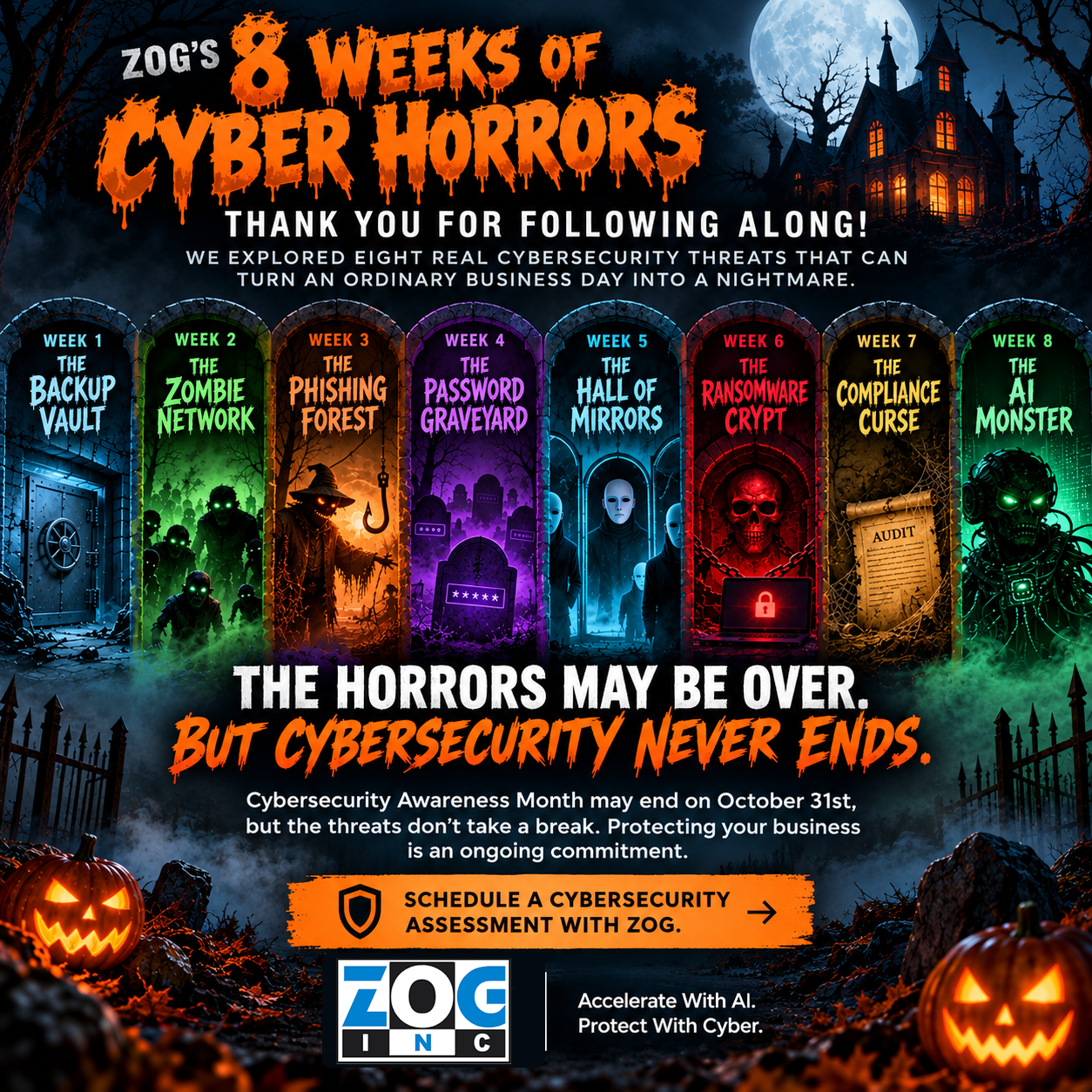
8 Cybersecurity Lessons Every Business Leader Should Carry Beyond October
For eight weeks, we've taken you through some of the scariest cybersecurity threats facing businesses today.
We've explored locked systems, compromised networks, stolen credentials, sophisticated impersonation, ransomware, compliance nightmares, and the emerging risks of artificial intelligence.
Some of these threats may have sounded like something out of a horror movie.
Unfortunately, they're very real.
As we wrap up Zog's 8 Weeks of Cyber Horrors, we want to thank everyone who followed along, read our blogs, shared our posts, and joined the conversation.
But before we close the crypt and put away the Halloween decorations, there's one important message we want every business leader to remember:
Cybersecurity Awareness Month may end October 31st. Your responsibility to protect your business doesn't.
Cybercriminals don't take November off. And protecting your organization isn't something you can check off a list once a year.
Let's revisit the eight horrors we faced and, more importantly, what they taught us.
8 Cyber Horrors. 8 Lessons Worth Remembering.
1. The Backup Vault: Having Backups Isn't the Same as Being Able to Recover
Every business knows backups are important.
But what happens when you actually need them?
Are they protected? Are they complete? Have they been tested? How quickly can your business get back to work?
2. The Zombie Network: Your Devices Could Be Working for Someone Else
A compromised computer doesn't always stop working.
Sometimes it continues operating normally while secretly participating in a botnet, sending malicious traffic, or helping attackers target other organizations.
Without appropriate security monitoring, businesses may never realize their devices have been compromised.
The lesson: Just because your systems appear to be working doesn't mean they're secure.
3. The Phishing Forest: One Convincing Email Can Change Everything
Phishing attacks have become increasingly sophisticated.
A fraudulent invoice, a fake vendor request, or a message appearing to come from a trusted executive can lead to stolen credentials, financial fraud, or unauthorized access.
And with AI making fraudulent communications more convincing, recognizing suspicious messages is becoming harder.
4. The Password Graveyard: Old Credentials Can Come Back to Haunt You
Weak passwords, reused credentials, and accounts belonging to former employees create unnecessary opportunities for attackers.
A password exposed in one breach may be used to attempt access to other business systems.
And accounts that should have been disabled can become forgotten entry points.
The lesson: Strong authentication, password management, and regular access reviews are essential.
5. The Hall of Mirrors: Seeing and Hearing Isn't Always Believing
AI-generated voices, videos, and impersonation attempts are changing how businesses need to verify identities.
A familiar voice requesting a wire transfer or an urgent message appearing to come from your CEO should no longer be accepted at face value.
6. The Ransomware Crypt: Cyberattacks Are Business Interruptions
Ransomware doesn't just encrypt files.
It can shut down operations, disrupt customer service, delay projects, expose sensitive information, and create significant financial losses.
And paying a ransom doesn't guarantee recovery.
7. The Compliance Curse: Being Compliant and Proving It Are Different Things
A cybersecurity incident can create consequences long after systems are restored.
Regulatory obligations, contractual requirements, insurance questions, and legal exposure may all come into play.
Businesses need more than written policies and security tools.
They need evidence that required controls are actually operating.
The lesson: Compliance should be an ongoing business process, not an annual checkbox exercise.
8. The AI Monster: Powerful Technology Requires Strong Safeguards
Artificial intelligence offers tremendous opportunities for productivity, efficiency, and business growth.
But AI-powered attacks, prompt injection, excessive permissions, and autonomous agents introduce new risks.
Businesses need to understand what their AI systems can access, what actions they're allowed to take, and when human approval is required.
The lesson: AI adoption and cybersecurity must move forward together.
What Do All Eight Horrors Have in Common?
At first glance, these threats seem very different.
A botnet doesn't operate like a phishing attack. A ransomware incident isn't the same as a compliance failure. And AI introduces challenges that many businesses haven't encountered before.
But they share something important.
The damage often becomes much worse when businesses aren't prepared.
A phishing email becomes a financial loss when verification procedures are missing.
A ransomware attack becomes a prolonged shutdown when recovery hasn't been tested.
A compliance gap becomes a serious business problem when leadership doesn't know it exists.
And an AI tool becomes a security risk when nobody understands its permissions or capabilities.
The common thread isn't simply technology.
It's visibility, preparation, accountability, and ongoing attention.
That's why cybersecurity needs to be treated as a business priority, not just an IT responsibility.
Five Questions Every Business Leader Should Ask
You don't need to become a cybersecurity expert to lead a security-conscious organization.
But you should be asking the right questions.
1. If our critical systems went down tomorrow, how quickly could we recover?
Don't settle for knowing that backups exist. Understand whether recovery has been tested and how long your business could operate without essential systems.
2. Are our employees prepared to recognize and report cyber threats?
Training shouldn't be a once-a-year presentation. Employees need ongoing awareness and clear procedures for reporting suspicious activity.
3. Do we have visibility into what's happening across our technology environment?
Security tools are important, but so is knowing whether someone is monitoring alerts, investigating unusual activity, and responding to threats.
4. Are we meeting the cybersecurity requirements that apply to our business?
Whether your obligations come from regulations, contracts, or insurance requirements, leadership should understand where the organization stands and what gaps need attention.
5. Do we know how AI is being used throughout our company?
Understand which AI tools employees are using, what information those tools can access, and whether appropriate safeguards and approval processes are in place.
If your leadership team can't confidently answer these questions, that's a good place to start.
Cybersecurity Awareness Doesn't End in October
October gives us a valuable opportunity to bring cybersecurity into the spotlight.
But the threats we've discussed don't follow a calendar.
New vulnerabilities are discovered. Employees join and leave. Technology changes. Businesses adopt new applications. Attackers develop new techniques.
And increasingly, AI is changing both how businesses operate and how cybercriminals attempt to exploit them.
A cybersecurity strategy that worked two years ago may not address the risks your business faces today.
That's why ongoing security reviews, employee education, monitoring, recovery testing, and leadership involvement matter.
Cybersecurity isn't a project you finish. It's a commitment you maintain.
Don't Wait for Your Own Cyber Horror Story
Over the past eight weeks, we've highlighted what can go wrong.
Now it's time to focus on what your business can do right.
At Zog, we help small and midsize businesses understand their technology risks, strengthen cybersecurity defenses, prepare for disruptions, navigate compliance requirements, and adopt new technologies like AI more securely.
Our approach starts with understanding your business, not simply recommending more technology.
Because the right cybersecurity strategy should protect more than your computers.
It should protect your employees, your customers, your operations, and your ability to grow.
How Confident Are You in Your Company's Cybersecurity?
You don't have to wait for a ransomware attack, a failed audit, or a compromised account to discover where your vulnerabilities are.
Schedule a cybersecurity assessment with Zog.
We'll help you evaluate your current security posture, identify areas of concern, and prioritize practical steps to strengthen your defenses.

The eight weeks of Cyber Horrors may be over. But protecting your business never ends.
Accelerate With AI. Protect With Cyber.
Leave a Comment
Your email address will not be published. Required fields are marked *